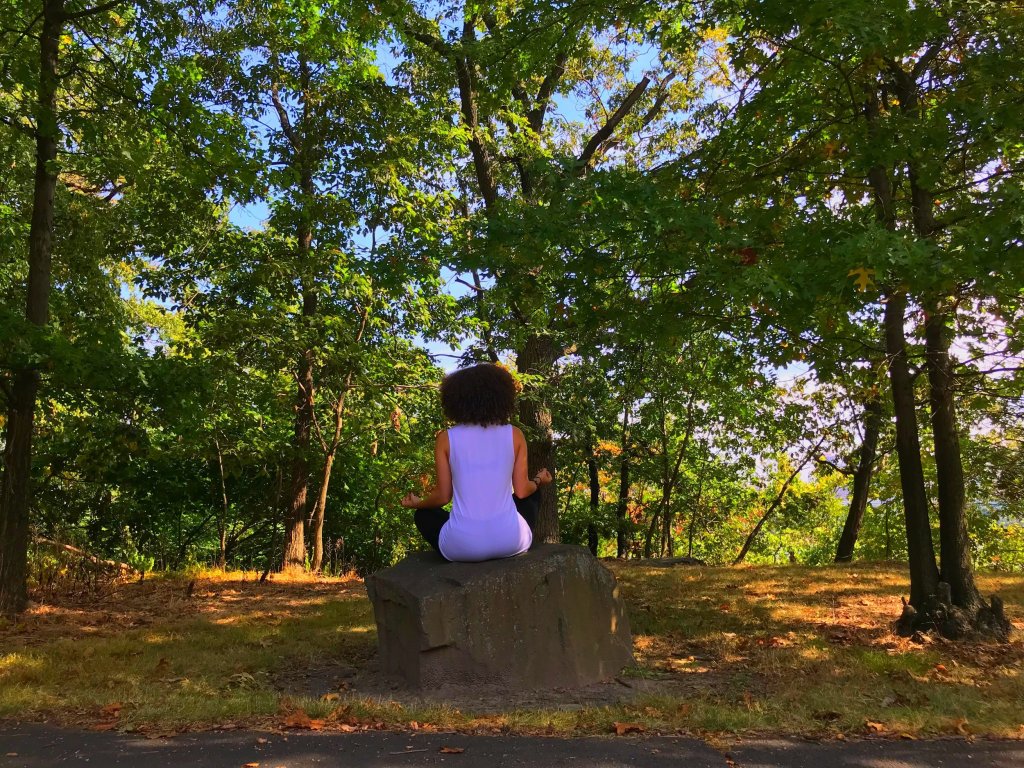
Posted in Practices

Learn How to Respond Consciously

When a person is thinking with their emotional mind rather than their logical mind they are essentially under the influence. They have been tricked into believing that their emotions are in control instead of themselves. Or may not be able to tell the difference between emotions and themselves, identifying with each by reciting the phrase I am.

Negative emotions almost feel amplified and more powerful than logic or any type of reasoning. Sadness, for example, can grow into a debilitating physical emotion if left unattended. The body feels heavier and a person’s perception of the world becomes dim. The more we feed into this way of thinking the deeper we get sucked into the realm of negativity. The struggle with emotions is that our thoughts are their fuel. If we do not have control over our thoughts our emotions will continue to stampede through our lives, relationships and our overall wellbeing.

Unless we are conscious of what we are feeling and when it begins to arise it is easy to get stuck in this way of thinking.

Responding to something takes mental strength, effort and mindfulness.

Mental Strength

The mental strength of holding onto the original thought, phrase or event with the potential to send one spiraling into a predetermined reaction. Picture a set of brain muscles holding on for dear life to a pole in a storm. That pole is the reason your emotions began to arise in the first place. The storm is the thoughts and scenarios that follow the initial thought. They will bombard you, tempt you, upset you and make you consider letting go of the pole and holding on to them instead. The thought storm, has been groomed over the years to be powerful instantly leading you to believe you are weak against it. However, your mental strength uses the tool of patience to weather any storm and patience will always outlast anguish. 

Effort

Effort is the second step to responding rather than reacting. Effort is a form of determination, meaning it must be constant and not only be present when the thought storm isn’t as harsh. It must persevere and always continue moving forward, even if  at a slow paced speed. Some storms you will have to face multiple times and each time you will grow in mental strength and effort. These may become easier in time to overcome but there will continue to be obstacles and strong storms waiting to test you. Effort comes in right after mental strength and plays a bit of a bigger role. It’s the constant reminder to come back to this way of coping with emotions. It’s the determination to stay with the discomfort face it head on every time. Effort is coming back to something you know may not be a pleasant experience but doing it time and time again knowing it will make you a stronger person mentally. 

Mindfulness

Mindfulness is the third step in responding rather than reacting and you will constantly be using all three, at different and sometimes the same times. Although the concept of these three steps is a simple one it does not mean it will be easy. Mindfulness is observing this moment without passing judgment or wishing it were different. This does not mean you will be at peace with it instantly. It does mean, however, you are no longer trying to change what has already happened or wishing for a better outcome. You will be deciding to leave unnecessary mental anguish and suffering behind you for this new way of coping.

You have the choice to respond to the emotions that arise within you. What makes you believe you aren’t in control is the power behind your thinking habits. It takes an incredible amount of mental strength to believe in your ability to change, and an unending amount of effort to never give up and multiple doses of mindfulness to stay present with how you’re coping with emotions. When you choose to pause our regularly scheduled rumination, thinking or behavior pattern you interrupt autopilot. Allowing you to tune into what the mind and body are up to and become present with what is happening.

So pause, take a deep breath, and remember you’re in control.

Posted in Healing, MindBody

Practices of a Healthy Mind

What is Meditation?


“A quality of high attentiveness and concentration. An attitude of open mindedness and curiosity.” 

Meditation is the disciplined practice of concentration and focus, whether it be on the breath, a movement, a repeated phrase or an object. It can be done while sitting in a chair or on a mat, standing, lying down, practicing yoga or taking a walk. Essentially, it is the act of paying attention and increasing your focus muscle, inviting a sense of calm and clarity to the mind. This is often misinterpreted as clearing the mind of all thought, but that’s definitely not the point of meditation. It’s about practicing the art of slowing down both mentally and physically.

There is no end goal to meditation. It is a practice meant to be applied throughout your life. The more you practice the better you become at practicing stillness. It’s important not to become discouraged by any difficulty in the beginning. One of the biggest challenges when starting a meditation practice is that there is no instant gratification. The world we live in thrives on immediate answers to questions and solutions to problems. Moreover, our emotions are lacking regulation because we simply don’t take the time to experience them as they occur. It isn’t easy to face the reasons why we feel pulled in 6 different directions at one time, however it is important to get in touch with those reasons.

Slowing down and paying attention is exactly what we need to balance us out in such a fast paced society. It allows us the chance to be present and appreciate what we have in the midst of striving for more. The mind won’t function at a higher rate with the same mentality that burns it out. The definition of insanity is repeating the same actions and expecting new results.

So what is Mindfulness?


Mindfulness is a practice of awareness. Practicing awareness is bringing your focus to either your thoughts, physical sensations or breathing, whatever is occurring at this moment. When you are being mindful you are utilizing the traits of patience, acceptance, forgiveness, nonjudgment and having a beginner’s mind toward yourself and others. Whether in the form of anxiety or a difficult emotion, we need to start paying attention to our emotions and learn to regulate them in the moment.


Although mindfulness and meditation are both practices they are not one in the same. Mindfulness incorporates the principles listed above and can be practiced at any moment. It is the simple act of paying attention to the minor details that are normally glanced over. Brushing your teeth, showering and walking out of your house, just to name a few. For instance, have you ever driven from one place to another and didn’t remember the actual driving process? After learning how to drive it becomes habitual. The mind kicks in when it’s necessary, like an emergency brake or when traffic breaks so we speed up. But for the majority of the time we allow our autopilot to take over. 


If we can allow our awareness to shut off when we are operating a vehicle daily,

how many other vital moments are we missing?


Mindful Awareness Meditation 

This is a simple discipline that will both challenge and change you, combining both mindful awareness and meditation into one very powerful practice. First you need something to focus on and in this case it will be your breath. The only way to know when you are distracted is if your attention is on one thing to begin with. The breath is portable, easily accessible and always in the present moment-making it the ideal single point of focus.

Next you’ll need to find a comfortable posture. If you’re choosing a chair I would recommend one without arms to practice proper posture, feet flat on the floor. Placing your palms on your knees, facing the ceiling or resting on your lap (pretend you’re holding a giant imaginary wheel.) Remember you can also lay down and practice on a mat. I wouldn’t suggest doing so on your bed; your body understands that comfort zone as place to sleep, not pay attention. 

Finally set a duration of time, preferably 10 minutes to start, and focus on your breath. Your thoughts will absolutely interrupt you and pull you away from your purpose. Some may be unpleasant or fantastical, continue to remind yourself gently why you are sitting here. Keep coming back to the breath. Losing your train of thought is just another form of practicing patience with yourself. Don’t attach expectations of disciplined stillness onto this practice when this is something you’ve never done. And don’t give up at the first sign of frustration! 


Struggling to sit in stillness for 10 minutes is why you should continue to practice sitting still.

Practicing Discipline and Responding to Distraction

When you first begin to meditate your thoughts will be running wild. Your mind thinks this way 24/7. The only difference is now you are paying attention to those rapid thoughts. That’s a HUGE step in the direction of progress. Remember meditation is a disciplined practice. Be kind, patient and forgiving toward yourself when losing track of the breath. Keep coming back to the breath over and over and over again.

The time of day you choose to meditate varies for each person. Most of the books I’ve read recommend doing it first thing in the morning to set the tone of the day. I’ve found it helps pairing meditation time with a responsibility or chore. My morning practice takes place after I brush my teeth. I sit on a chair or mat for at least ten minutes, focusing on my breath and visualizing the day ahead. On the days that I am extremely distracted struggling to stay still, I gain the most from my practice. With that experience in mind I know it’s important to continue checking in on my moods and thoughts throughout the day.

Keep coming back! This advice can not be said enough. Come back to your breath, the chair, the reason why you sat still to begin with. Only then will responding to the mental distractions become easier. It’s not about clearing your mind but rather working toward peace of mind. Committing to meditation, even just ten minutes a day will build your awareness of self and increase your ability to regulate emotions. 

TRY THIS AT HOME!

If there were a way to slow the chatter of your mind, learn to control your moods, and ultimately become a better person you’d jump on the chance. Meditation is that practice. It is not a quick fix because it’s the journey that is meant to change you. Only in experiencing moments of discomfort are you pushed to fulfill your potential. Practicing stillness makes you grow through what you go through. 

Whatever success looks like in your life meditation will only help you get there. Commit to your future self’s mental health and practice meditation for one week, 10 minutes a day. Pay attention to the challenges, not with a judgmental mind but with an open awareness- get to know the real you. 

Meditation is not just for religious people, spiritual people, or those who believe in something higher. It’s for those who wish to function optimally in an ever-changing world.

Posted in Healing

Where It All Began For Me

Have you ever become a version of yourself that is cringe-worthy to acknowledge?

Have you ever struggled to face yourself in the mirror and the choices you’ve made?

Have you ever lost yourself in someone else’s world?

Where do you even begin to pick up the pieces?

For me it started with the breath.

Sit With Yourself

My journey begins with a life shattering heartbreak, and by life shattering I mean the world as I knew it no longer existed. I didn’t leave because I fell out of love, in fact that’s what made it so hard. The love I felt for my partner was deeper than the love I felt for myself, that’s why I left. My intuition grew so loud that I could no longer ignore the call to walk away, even though I had no idea what life would be like on the other side. Something told me it was time to take the first step away from pain and into something new, even if I couldn’t see the next 100 feet in front of me.

Leaving a toxic relationship left me sad, fragile, and unhealthy. My soul knew I was meant for more, my mind couldn’t escape the life I had just left, and my body was too tired to make a move. After months of anxiety, depression, and essentially living in fight or flight mode, I knew a change needed to be made. There would be no divine intervention, or magical sign from above. It wouldn’t happen if I moved to another country to begin a new life. No matter where I went or what I did, the suffering would follow me, so I knew the change needed to happen from within.

I’ll never forget the day I decided to make a conscious effort to heal my broken self. Lying in a bed with tear soaked tissues and sheets that stunk like me, I finally asked myself “what can you do in this moment to get closer to something better, and away from this feeling?” The answer was to sit. Whether this is the right answer or not I’ll never know, but that was the answer that surfaced for me. I only had energy to change positions, so I went from lying down to sitting up.

It didn’t seem like much but it got my mind working in a different direction, a voice inside my head responded to my action by asking “now what?” Suddenly it hit me. In that moment I realized asking yourself the right questions will lead you to get answers that move you forward. Questions are what either fuel the rumination of negative thoughts or what fuel the momentum in a positive direction. I finally began to see that I did have some control over what I was going through, but I still felt overwhelmed by change. So the next thing I did was close my eyes and let out a huge sigh. I decided to sit and just breathe.

I didn’t know much of what meditation was, or the benefits, or even if I understood at that moment that I was meditating. But I was aware that the only thing I had control over in that moment was my position and my breath, so I went with it. What felt like an hour was most likely just short of 10 minutes, and when I opened my eyes nothing around me changed. I still felt sad, bitter, anxious- although slightly less; but each time I brought my attention back to the exhale something was different. It was in those brief moments that I wasn’t defined by my emotions, my experience, or even my physical sensations. In those tiny glimpses of a second that I could focus on my breath I became the awareness behind my experiences.

Just a glance at a different way of thinking, a simple taste of a slightly better perception, was all I needed to believe my life was in my hands. I started to see the next 100 feet.

And So The Self-Discovering Journey Begins

After that day I vowed to always come back to my breath, no matter where my thoughts take me or what my body wishes we were doing instead of being still. I promised I would sit with my discomfort until it revealed what it was here to teach me. I began to understand that I was operating from 3 different points of view: my past, my present, and my future self. So I decided to explore all of me and get to know my true self. In order for me to heal I needed to know who was controlling my thinking mind in the moment, and how to align it with my current actions. Getting to know my three selves allowed me to accept my painful past, come back to the present moment, and accept the possibility that I could create an even brighter future.

The more I began to control my mindset and attitudes the more my goals of health expanded. It was challenging to look in a mirror, put on clothes, and carry conversations with others because I was so deeply uncomfortable in my own skin. I started asking myself how I wanted to feel, rather than focusing on how low I was feeling, and that began my journey of 3 fold health.

Focusing on health as a three-fold process meant mental, physical, and spiritual healing. In all of these ways I was weak, learning how to use muscles that have been dormant for so long took patience and consistency. I started meditating and writing about my journey daily, while working out 3 times a week. Just getting to the gym on some days was the accomplishment, but as time went on I increased the duration of workouts and amount of times I exercised weekly.

Fitness became an outlet for me to express my strength, growth, and ability to push my own limits. I loved who I was becoming, not because I was putting more weight on or because I was finally using double digit weights, but because I remembered where I started. I knew I wanted to help others find this personal power within themselves, so I began studying to become a personal trainer.

The more I got to know my true self the more I understood I’m not alone in this struggle of self. And just like with the journey of getting stronger physically, I wanted to help others dig deep into their personal power of knowing and loving themselves unconditionally. The deeper I got to know myself the more passionate I became about sharing my knowledge, insights, and experiences with other women who were just as lost as I once was. This sparked the idea to pursue a career of teaching women the power of 3 fold fitness, so I began studying to become a mindfulness teacher.

That Person Led Me Here…

My solution was to forgive myself, accept myself, and become the greatest version of myself- because I owed that to me. I promised the fragile girl crying on the bed I’d grow into the person she needed most that day, a healer. In that moment I would have never believed it to be possible to be who I am today, sharing these messages, loving what I do all while creating positive ripple effects in the world. It’s not about knowing the outcome or having a set deadline for your aspirations. It’s about sitting with yourself, getting to know who that is, having the courage to release all that burdens you and start holding onto what brings you closer to your purpose. The more I aligned my choices, decisions, and daily habits with my future self’s lifestyle, the more I began to attract that way of being into my life. My mission is to help lead you inward to your personal power by opening up and sharing what led me to mine. I don’t believe we all have to hit rock bottom to find our true purpose, and my wish is that you have the courage to believe that whoever you are, and where ever you start, you are enough to make it happen today.

Posted in Mindfulness, Personal Growth

A Day of Mindfulness: A Life Long Messsage

A Sunday well spent


At 7:45 am I set off to the Blue Cliff monastery which is surrounded by mountains in upstate New York. The ride was about an hour and a half, 45 minutes consisted of miles and miles of immense trees. It began to drizzle and quickly stopped, as the grey clouds separated revealing a beautiful autumn sky. The closer I got to the mountains the fluffier they became, almost as if the clouds were aware of my plans and were conspiring to set the tone. After having an intense week filled with stress and responsibilities I had been counting down the minutes until I began my day of mindfulness. It was finally here.


Upon my arrival the monks and visitors had already begun singing Buddhist songs of love and peace, setting a welcoming vibe as I walked across Mindfulness Road to join them. As we put hands together in gratitude I looked around at the handful of people I’ve never met and yet felt at home with. Experiencing different walks of life that inevitably brought us all together for a day of peace and calm. Collectively we bowed our heads and set an intention before starting our mindful walk through the forest. For the mindful walks I have done in the past I usually focus my attention on my feet; slowly placing my left heel down and then my right, almost as if I’m walking in slow motion. This time I decided to change my intention to focusing on my breath and simply appreciating life.


If you’ve never heard of or experienced a mindful walk I highly suggest giving it a try. There are many different types of mindful practices, all of which consist of paying attention to an action, or actions that we usually don’t give a second thought to. We are turning off our autopilot and noticing it as if it were the first time. The mindful walk allows us a chance to view walking from a different perspective. We get from one point to another and often never pay attention to the in between. The how. It helps us practice gratitude for this simple act that we do every day.


For the most part the mindful walk was silent, only the sounds of footsteps crunching twigs and the wind that kept us company. When we first began it was difficult to silence my thoughts, especially because I had such a stressful week. It felt as if every second my mind thought of something else to distract me. Whether it was wandering into responsibilities waiting for me at home or replaying the events of the past week, focusing was difficult. Remembering my intention was to focus on my breath, I reminded myself of just that, over and over and OVER again. After walking for about 30 minutes we paused for a few moments to just be. Be grateful, be patient, be still.  Above me trees were swaying while others were immovable, all of them unapologetically beautiful in their stance. There were tiny chipmunks unseen but absolutely heard, while the birds were quietly in the open. Our walk continued and there were many different statues of Buddha surrounded by piles of 3 rocks on top of one another. People interpret this in different ways. I saw this as a chance to acknowledge that I was at peace and that I have the power to cultivate this at anytime.


“By realizing my emotion I understand impermanence.”

After our mindful walk through the forest we were given sometime to ourselves before sitting in on the dharma talk. I chose to use this time to watch the clouds of course, after all this is my favorite pass time. They were so beautiful I almost lost track of time. The breeze picked up and blew cool mountain air all around. I felt peace of mind for the first time in…I can’t remember when. I headed over to listen to the wisdom of the monk speaking. As she walked in, and again when she sat down, we joined our hands and bowed in gratitude together. Before beginning we collectively paid our respects to those who lost their live 15 years prior on the morning of September 11th. Strangers coming together to create a peaceful and loving feel on such a profound morning. The energy in the room was comforting.


The topic of the talk overall was how our emotions change due to the behavior of others. The example given was when someone does something we do not like we put them in a negative category in our mind. Once someone, or an event, is placed into a particular category it is not likely that we will cleanse our mind of those thoughts and labels. This got me thinking about the stressors I have been experiencing and the labels I have created for them. Just as I had experienced a bad day, or few days, so could the people who upset me. I felt my judgment toward them melt away. I decided that every being in my life had the right to a clean slate, just like me. We were then given a breathing exercise to try: when we inhale we realize the emotion that we are currently feeling, when we exhale we acknowledge the behavior caused by these powerful emotions. Listening to her speak was a life changing experience for me. Her words flowed through the room as if this were all so simply to understand, therefore easy to embody the next time an obstacle feels impossible to get through. Later on in the day I practiced this meditation next to a statue of Buddha and placed my own three rocks atop one another.


She continued on to explain the concept of nondualism. “We are not the same, but we are not different.” What I took from this is that we are all interconnected and yet still individuals who can not be compared to one another. As the lesson continued I began to understand how our emotions tie into nondualism. When a person or event causes us to experience a certain emotion we are quick to judge, and often not change the judgment we have passed until another experience occurs. This is because we have judged ourselves as well, creating an us vs them mentality. Nondualism embodies the principle that we do not have to have similar interests, lifestyles or mindsets for us to thrive together as human beings. It is imperative for humanity to accept that difference does not mean distance, rather it could present the possibility for an opportunity of understanding another way of life. The broader we expand our horizons the faster we break down the barriers between knowledge and ignorance, comfort and fear. When the dharma talk concluded I felt a shift in my being. I felt a boost of confidence in my ability to spread peace and love. Above all else I felt compelled to share these beautiful words with as many people as possible. If you’ve read this until the end, thank you. Do not underestimate the power of positivity. Please pass it on to someone who can benefit from these lessons. Namaste.
#StayMindful

Posted in Poems

Freedom

We must let go.

Of people and the expectations we hold them to.

Of the plans we make and the promises they broke.

Of the pain yesterday held and the uncertainty of tomorrow.


We must let go of the idea of changing others.

Of the thought that we can make them understand.

Of the illusion that we can abolish ignorance.

Of the countless times we see what we want to see.


We must let go of toxicity.

Of the anger we built up so high.

Of the sadness we allow to consume us.

Of the regret that stains our past.


We must let go of fantasies.

Of the power we believe holding on gives.

Of the idea that we are strong to do so.

Of the fear that life as we know it must change.


We must let go to be free

We must forgive all

And it must start with me.