Posted in Growth

How to B.L.O.O.M in Dark Times

concrete tunnel

The Void

It’s been said that destruction is often the first step in recreation. The caterpillar must die for the butterfly to come to form. Sometimes when it feels like your life is falling apart, it’s actually beginning to come together in a new and improved way.

While in the thick of the storm it’s hard to see that it will pass because you’re focused on lack, damage, and change. The normalcy as you know it has ended, leaving you in what is known as the void-a space between what was and what will be.

During your time in the void, you’ll be learning about your true nature, being stripped from life as you know it can do that to you. You’ll be forced to shift your perspective into the next steps to take or stay stagnant, waiting for the storm to pass.

The truth is all storms pass, everything changes, nothing is permanent. But what is also true is there is a version of you who enters the void and a version of you who leaves it, you’ll be changed forever.

How you shape that perspective and build that character depends on the choices you make in the void.

close up photography of pink tulip flower

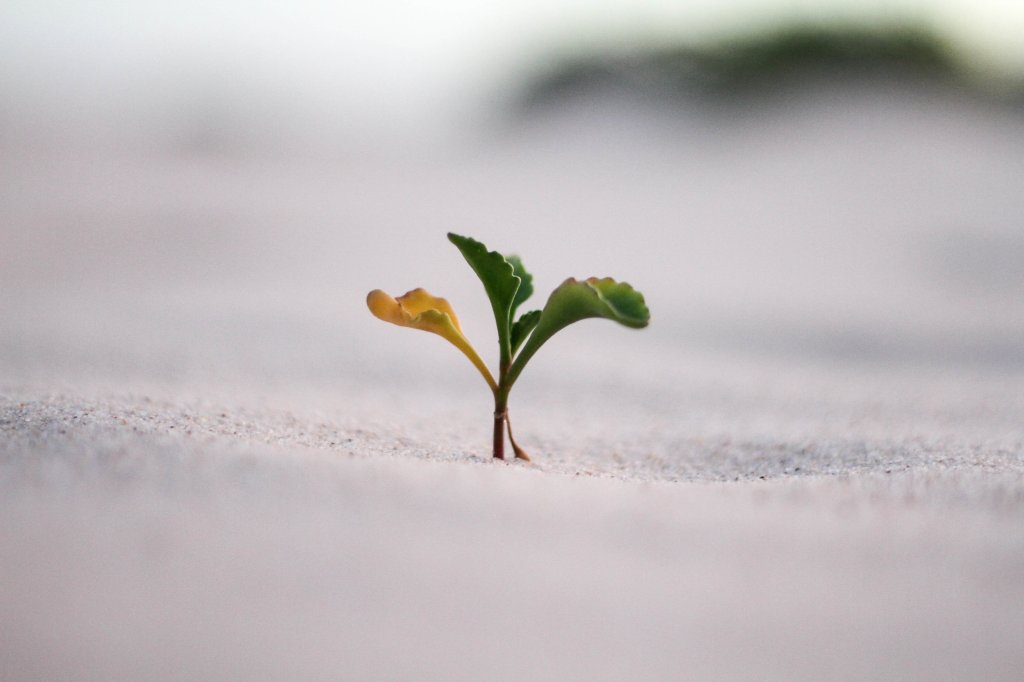
Are you buried or planted?

Bring to mind the seeds that are placed in the ground to harvest. Think of the trying times and tests they are put through before becoming a plant, a tree, medicine, or food on your plate.

Dug into a deep dark hole with little if any light, left only with an innate sense that something is going to happen next. Life can feel just like this at times. Things are dark and uncertain, you know something’s going to happen but aren’t sure what will.

All that you’ve got is your will to push through and the mindset to fuel it, but these things are choices, not obligations. The perspective you choose will determine the difference between whether you have been buried and planted in the ground. And your choice will begin propelling you toward that outcome.

Being buried feels like a complete lack of control over your life. Feeling the weight of the world on top of you, keeping the light from coming in. An experience similar to suffocation as you’re being pushed down deep into a swirl of emotions that continue reminding you of all the things you can’t change.

At first, it may seem that these things are happening to you, but after a while, you begin to expect it and maybe even seek the presence of unease. Simply put, the void means you’re not living the life you’ve been used to but you’re also not yet living your next chapter because it’s still being built.

It can feel like standing still in a field with no paths leading home until you choose to make one. If you choose to believe you’re being buried this feeling will last a very long time and you’ll continue to miss out on what’s waiting for you.

Being planted will have similar emotions attached but with a difference in feeling. While emotions arise naturally within feelings are focused on and determined by will. The experience may still be unpleasant but you’ll learn to focus on what is waiting for you on the other side of this trying time.

There may still be weight over you of all that you’ve lost but you’ll begin to acknowledge what is no longer holding you back. You’ll still be in darkness for quite some time but you strongly believe that if you push on a little longer, that light will shine through.

The time spent living in the void is a time to accept what is as a start to a brand new beginning. If you can shift your perspective from darkness to light, while still in the darkness, you’ve begun laying the foundation of the next chapter. When you choose the perspective of being planted there is no place to go but up, and you’re well on your way.

woman wearing grey long sleeved top photography

Relax, Release, Allow

Acceptance is a large step toward whatever lifestyle or goal you are trying to reach. You need a starting point and that’s what acceptance gives to you. Acceptance isn’t giving in or quitting.

It’s not telling yourself this is your way of living forever and it’s definitely not a pass to let time go by without putting effort into change. It is only once you’ve fully accepted where you are at this time in your life can you begin to see clearly where it is you’re going.

The three steps to come back to that help pave the way for life after acceptance are:

relax, release, and allow.

Relaxing into this moment means mentally and physically too since the body often holds onto tension, sometimes hours after your thoughts and emotions have passed. Bring more attention to the body’s sensations while you’re experiencing unpleasant emotions or thought patterns.

It takes time, practice, and consistency so be patient with yourself as you meet the parts of you that are troubling to navigate. Keep practicing. Keep coming back with a single breath cycle, an inhale and an exhale, to ground you back into your body and the present moment.

Once you’ve begun to relax your mind and body you can start moving into releasing what you are trying to hold onto. This should start at an internal level such as limiting beliefs, physical tension, and negative thoughts that are causing burdensome experiences.

Again, be patient with yourself and don’t quit because it’s hard to focus long enough. It won’t be easy but the simple way to approach it is to come back to the breath, the present moment, accepting what is even if it’s uncomfortable.

Whether you are aware of what’s happening within you or are keeping your eyes shut to the fact, it’s happening. Think of this practice as an awakening to your true self, drops of awareness in a giant bucket of consciousness.

When you’ve relaxed into the moment, begun to release what’s been holding you back, you can finally shift into allowing.

If you choose to believe you have been planted then you must believe that there is more transformation for you to go through. Being planted into the ground is the first step of many that lead to extraordinary growth that comes in stages.

fashion woman notebook pen

In order for you to expand and prosper you must first allow for these experiences to happen. Relaxing and releasing what has happened or what is currently unfolding is different from practicing allowance, which can refer to either this moment or what is on the way.

A good way to remind you to practice allowance is by bringing your attention to when you are choosing resistance. Notice if you’re resisting anything at this moment, in your life, or in the grand scheme of things.

There are plenty of circumstances out of your control that you do not have to enjoy or even agree with, but resistance is a choice. When you choose resistance you’re investing energy in not letting go to a perceived idea or way of living, instead of proactively considering your next move.

Practice shifting your energy to what you can do.

Expansion often arrives disguised as discomfort, suffering, the paralyzing fear of not knowing what comes which helps deepen your roots while forcing you to reach higher. The higher you reach the closer you meet the goodness and light that trying to meet you.

Allow Yourself to B.L.O.O.M

This simple acronym is an effective way to remember how to navigate through the void of your life. Each time you visit it’ll surface different answers to these prompts, but it will always shift your perspective toward growth.

It’s important to remember that which does not challenge you will not change you, start looking for the ways you can improve right now no matter how small the step. Become aware of what is happening in the void without attaching your personal story to it.

Begin stripping away the judgments you attach to the struggle you are up against and start thinking of practical ways to maneuver through. The time you spend in the unknown months of your life can be a powerful shift in mindset, skill set, and momentum if you allow it to be.

These 5 prompts are a great place to start.

BLOOMpin

Blessings

Practice shifting your attention toward all of the wonderful things you have at this moment. Bring your focus to the feeling of your blessings, it’s less about the story surrounding it so don’t get caught up in details.

Each time you practice you’re expanding your imagination which is a muscle that weakens each time you choose doubt and disbelief. This will make it easier to visualize and believe in the blessings that are on their way to you.

Lessons

Learn how to focus on the growth-focused takeaways from each day you live through. Make a shift from the perspective of the sufferer to the student seeking out all the lessons you could learn from what you’re going through.

It could be as simple as learning to never make that mistake again or learning to incorporate more patience into your day. As with all of these exercises you’ll get better with consistent practice.

Obstacles

Acknowledge the obstacles in your path with an attitude of conquering them, crumbling before them. Recognize the journey will not be one of ease all the time and there will be things that trip you up.

Shift your focus to how you’ll overcome them, what skills you need to acquire, how much time you’ll need to invest, and how wonderful the reward will be on the other side. Obstacles are not optional, they’re necessary for growth, but what is optional is the way you choose to approach them,

Opportunities

Actively begin seeking ways to improve mentally, emotionally, and personally to create a better lifestyle. There are plenty of opportunities for you to grow through what you go through if you’re looking for them, which means you have to practice focus.

Start with your thought patterns, limiting beliefs of what’s possible for you, intense emotional reactions, and the environment you’re in. Open up a running tab of ways to be a little better than you were yesterday. Start slow, be realistic with the season you’re in, but never suit looking for expansion.

Momentum

Start to strategically combine all that you’ve learned and practiced with the above concepts and create an action plan. Be honest with how lofty your dreams are and don’t make that a bad thing, just start with what you’ve got and move forward.

Momentum is going to be the driving force that pushes you out of your comfort zone and into the successful lifestyle you imagine for yourself. You also need to be honest about the season of life you’re in, the burdens you’re carrying, and what you’re capable of sustaining once you start.

Some people can take quantum leaps, while others have to take baby steps, don’t judge yourself on where you’re starting momentum has a way of picking up quick.

Let’s Review

At some point in your life, you will find yourself in the void, the space between who you were and who you’re becoming. It can be a time of confusion, fear, scarcity, and uncertainty. It can also be a time of hope, empowerment, faith, and growth.

The beauty of the void is your perspective determines what you get out of it. The situation itself isn’t something you have control over but the response to it is in your hands. Before you respond to something that’s happening around you it’s important to practice introspection to find out how you feel about it, what you want out of it, and how you’re gonna make it happen.

Don’t be afraid to sit with yourself during uncomfortable times. In fact, this should be the first thing you do. Get to know what’s going on inside of you, learn about your fears, ask about your desires and the person you want to become. Don’t stay stagnant in the void because in time it will become a memory of the past. So how do you want to remember this time?

As Jon Kabat-Zinn so perfectly titled his book “Wherever You Go, There You Are.,” so stop running from yourself. Relax into the present moment because it’s the only one that actually exists, the rest are either memories, ruminations, assumptions, or expectations of the past and future.

img_0261-1

Be here now.

Release your grip on what has past, what is no longer serving your highest good, what cannot be changed and notice how all of those thoughts impact your body. Start letting go of tension in your body, release your clenched jaw and fists, uncurl your toes, sit up straight and just present.

Stop resisting what you don’t like about this moment, stop pushing away your reality in hopes of feeling better, stop denying things as they are and awaken to the power you have right now. Stop trying to change your life by resisting what is and start focusing your energy on what you can do about it.

Allow yourself to expand into new possibilities, creating space for new chances and fresh starts to find you. Allow yourself to bloom.

Start by counting your blessings every day and finding the lessons you could be learning every night. Start acknowledging the obstacles in your path as chances to enhance your mindset, skill set, and awareness of the journey ahead.

Start seeking opportunities in ordinary moments to improve your emotional and mental wellbeing, while growing into the person of your soul’s highest desire. Begin building the momentum you need to push you upward, into the light and out of the darkness.

All of this is possible if you’re open to change, if you believe that you are enough as you are, and if you start now.

Love Heal Grow

Posted in Healing

How Caregivers Cope

In this season of my life, I am one of the primary caregivers for my mother who was recently paralyzed. The complications that followed have piled high, requiring a great deal of care, energy, and time invested every day. With personal challenges for the caregiver and health challenges for the person in need of care, it’s essential to create boundaries to make sure well-being is a priority.

As a mindfulness teacher and a student of self-improvement, I understand the significance that my mindset brings. Starting each day without thinking about what I need to be at my best is a recipe for personal neglect. The more I make a habit out of pushing my needs to the back burner, the harder t will become to provide excellent care for those who need me most. Although I’ve lived by these principles for years, and even began teaching others, my mother’s physical trauma pushed me out of alignment with my core beliefs. So I went back to the drawing board to get to know myself and all the ways I could improve.

For the last few months, I’ve noticed a pattern of unhealthy habits and choices. Most days I find my energy to be sluggish even with a full night’s sleep. The mornings are the most challenging for me when they used to be when I was at my most creative. My appetite has dwindled while my headaches have increased. This dip in energy causes other areas of my life to suffer such as memory, organ health, and overall mood changes. Before this major lifestyle change, I would get the occasional headache and sinus infection, but now I felt more ill than well often. I knew that this was a trying time for my family and me, but I also knew I wasn’t living as my best self. In order to provide the best level of care possible for my mom, I needed to make my health a priority.

I began to take stock of what was helping and hindering my overall health. Looking into the foods I was eating, my level of hydration, the information I was consuming, the environmental factors playing a part in my mood, the media I was focused on, the community I was in contact with and what it was doing to my performance. It was shocking to see just how much I was aiding to my own discomfort and dis-ease without even being aware of it. Once I knew there were choices being made each day making me sick, I knew how to go about making changes.

Coping Mechanisms

Each morning had a ritual of coffee on an empty stomach, sometimes with almond milk and sugar, sometimes just black. Afterward, I didn’t eat for a couple of hours and didn’t hydrate for even longer than that. While each cup of coffee was dehydrating my body I was running on empty wishing for the energy to push through, so I’d had another cup. This cycle continued for a few months.

At the end of the day when I was no longer needed by other people, I would overindulge in relaxation. I’d roll a joint or pack my bong and smoke the evening away. Now I’d like to make it clear that marijuana has been an incredible factor in helping me cope with anxiety, gain my appetite back, and when used with intent, given me a boost of creativity for my writing. But for months I wasn’t using it with the intention to come back to myself, to release the day or to gain focus on what was important. I was medicating so that I didn’t have to feel, deal, or handle life at the end of the day, only to wake up each morning to the reality that it was all waiting for me again.

Every few months I would finally muster up the energy to go out with friends. I’d look forward to grabbing drinks and not talking about what my daily life was like. Caregiving isn’t necessarily an easy thing to bond over because, thankfully, not many people live in that world. So when I made plans with friends it wasn’t to vent about the tough times or celebrate the triumphs my family made together. In my mind, getting together with friends became about stepping into an alternate reality where life wasn’t as hard and I could drink my troubles away.

As I took a non-judgmental view of my coping mechanisms I realized I was hurting myself; putting my body through the pain of not enough nutrients and hydration, putting my mind through the ups and downs of stimulants, putting my spirit through the pain of never being still. If I were going to be a better daughter for my mother, I had to become a better self for me. Because in a world where the circumstances are out of my control, the response to it all is in my hands. Rather than facing the terror, pain, fear, and unknown head on I was choosing not to face it at all. Instead, I chose to numb myself to the reality I was living in through cups of coffee, staying high, and drinking the pain away. I saw the toll it was taking on my daily routine, how long it took me to recover from everything and decided to make a change.

After lots of prayers, self-compassion, and forgiveness of my own actions I decided to cleanse for 40 days. Taking coffee away and staying sober to gain clarity on how to maneuver this season of life. Giving things up to challenge myself is a common theme. It pushes my personal limits, cracks the shell of limiting beliefs I hold, and starts to pave the way for even more possibilities. This, however, is probably going to be the most all of nothing personal challenge I’ve given myself because I’m removing the outlets I use to cope with pain. The pain will still be there, waiting for me, like an annoying family member who wants to retell that awful story for the 35th time. It’s going to test my patience, causing me to question what I can and can’t handle on my own. But being my mother’s caregiver has taught me a few lessons:

1.) Resilience is a choice and you can choose it every day.

2.) Learn to laugh at the difficult stuff and it’ll begin to sting a little less.

3.) Your emotions are trying to tell you something, sit with them and listen.

4.) Stop letting your thinking mind rule your life, not everything is a catastrophe.

5.) Even if it’s the worst news you’ve ever received, you can move with grace and love.

The point of this post is not to judge yourself on how you cope with pain and suffering. It’s not about how healthy you are or all of the things you’re not doing for your mind and body. It’s absolutely not about the right and wrong ways of dealing with responsibility, because girl let me tell you I’m still trying to navigate these waters myself.

What I would love for you to take away is that there is most likely something in your life that isn’t getting the attention it deserves. Maybe it’s the lack of healthy food your eating or movement you giving your body. Maybe it’s the way you deal with the hardest challenge in your life or the troubling emotions that feel too impossible to handle. I’m telling you to pay attention. Look at how you treat the unpleasantness in your life, and how it returns the favor in your lifestyle. Notice the lack of attention you give yourself, while you glorify the attention you give others. Raise your level of self-awareness so that you can truly begin to deal with and heal from whatever is going on in your life.

You owe it to yourself to face your life head on, and you can start today. Start by forgiving anything you’ve done that may have hurt you. Start by flooding yourself with love and understanding for doing the best you could. Just start paying attention to all of the things you’re neglecting. Because nobody needs you more than you need you.

Posted in Mindfulness, Practices

A 4 Step Guide to Calm

How is Stress affecting you?

Stress is experienced through various channels such as mental, emotional, personal, and relational. Whether it be a thought or experience out of your control, the stressor that has triggered an emotion becomes a part of you as energy.

Stress can turn into physical tension, emotional baggage, mental health issues or problematic behavior in the relationships in your life. There are certain stressors that are simply apart of life however, their impact on your wellbeing should not be as easily accepted.

The way you perceive the world plays a pivotal role in how you are reacting to the stress that occurs. Your perception of others is a mirror of what is happening within you. Therefore the gateway to responding consciously to stressful situations in your life is to raise your level of self-awareness.

After years of studying mindful awareness and stress reduction, I’ve come up with a simple practice that reminds you of how to remain calm and come back to the present moment.

Learn to Check Your G.E.E.K.

Gratitude, ego, expectation, and kindness are the 4 prompts that help ground you when experiencing strong negative emotions. This practice can be used when you are frustrated with yourself, angry with another person, or with a circumstance that happened outside of your control.

Below you’ll learn the power G.E.E.K and how to practice it.

Gratitude: Set an intention of APPRECIATION

Gratitude is the answer to living a happy life. The best way to practice gratitude is to find the good in what frustrates you and what you view as a problem. Everything is an opportunity to practice patience and growth. If you can begin to shift your perspective to thinking this way you are making progress.

Ego: Set an intention of EMPATHY

The ego is always living in the past or the future. It is threatened when you experience a negative emotion and will encourage any thinking that involves staying angry or retaliation. Often times it feels natural to lead with egoic thinking as a default. Practicing pause to ask the following questions is an interruption to emotionally driven thinking, giving you the chance to reframe your thoughts to problem-solving not problem sulking.

Expectation: Set an intention of PATIENCE

Expectations are always attached to particular outcomes you assume will unfold, often without awareness. Therefore both disappointment and happiness can be tied into the expectations you set for yourself and others. When overcome with intense emotion work to find the root of the issue by understanding what expectations allowed you to feel this way.

Kindness: Set an intention of COMPASSION

Practice a kind and generous way of thinking, being, and living. The way you treat yourself will reflect on the relationships you form in your life. Bring attention to negative self-talk and practice a compassionate inner language.


fashion woman notebook pen

Practices and Journal Prompts

for Finding Calm

The following questions are meant to interrupt your emotional mind from wanting to react and encourage you to shift your perception to one of compassion. Before you more on to the next intention and set of questions be sure to pause and take 3-5 deep breaths.

While you are in the midst of a pause your breath is the tool that will navigate you through what your autopilot would normally take care of. When focusing on your breath you are bringing the mind into the present moment to truly process and comprehend what’s happening and what follows.

The more you practice pausing the more you will continuously interrupt an unpleasant habit of thinking, which would most likely lead to unpleasant behavior. This is the way to control your moods.

(GRATITUDE)

With the intention of appreciation in mind, ask yourself:

Finding 3 things to be grateful for in what is currently causing you to suffer. Finding appreciation in that which causes you unpleasantness is the ultimate shift from victim to wisdom.

Ask yourself, how can I find the goodness in those who test my patience?

Notice the power of gratitude and the positive shifts you’re making with your thoughts before moving onto exploring ego.

Take 5 deep breaths and with each exhale invite a smile of appreciation for doing the inner work to shift your perspective of yourself and others.

(EGO)

With the intention of empathy in mind, ask yourself:

Am I comparing myself with someone else rather than expressing compassion for them? If so, how healthy is it to be comparing myself to others right now?

That which frustrates you can often be a mirror for areas of improvement in your life. Ask yourself, can I honestly see my own mistakes/shortcomings mirrored back to me?

What ways can I practice letting go?

How can I practice empathy to better understand this circumstance? Or the perspective of the other person?

Take 5 deep breaths and with each exhale extend understanding to yourself and others who may be experiencing suffering in any way. Clear your mind and welcome a clean slate for a fresh perspective.

(EXPECTATION)

With the intention of patience in mind, ask yourself:

Whenever we feel disappointed, frustrated or upset it is due to an expectation we set for ourselves or for another. With that in mind ask yourself:

What expectations have I set that allowed me to experience this emotion?

Understanding your control lies within the response, not the circumstance is a powerful realization. Ask yourself

What is a positive way to respond to this situation?

Take 5 deep breaths and with each exhale release your grip on this situation.  Clear your mind and welcome a clean slate for a fresh perspective.

(KINDNESS)

With the intention of compassion in mind, ask yourself:

After analyzing this situation with an open-minded perspective it is important that you end your thoughts on a note of kindness. Ask yourself:

Am I being kind to myself in this circumstance?

Consider the voice that’s been answering these questions for you. How was the tone of that voice? Were you gentle with your responses or did they surface as harsh?

If you noticed judgment in your self-talk try replacing it with a response you would say to a friend in your situation. Be understanding, kind and positive.

Am I being kind to those around me?

Take 5 deep breaths and with each exhale invite kind circumstances to yourself and others. Clear your mind and welcome a clean slate for a fresh perspective.


If you’re feeling better about the situation move forward with compassion and inner trust that all is unfolding as it needs to. If not, go back to the top and spend a little longer on whichever section is speaking to you. Use this practice as much as you need to. Take note of the questions that caused you to pause a bit longer or challenged your thinking.

Checking your G.E.E.K. can be a short in the moment practice or a longer one for deeper reflection. However, you use it be sure to embody the intentions you set before asking yourself questions that raise your self-awareness.

Remember that change begins with awareness of self, and it starts with you.

LOVE. HEAL. GROW.

Posted in Healing, MindBody

Practices of a Healthy Mind

What is Meditation?


“A quality of high attentiveness and concentration. An attitude of open mindedness and curiosity.” 

Meditation is the disciplined practice of concentration and focus, whether it be on the breath, a movement, a repeated phrase or an object. It can be done while sitting in a chair or on a mat, standing, lying down, practicing yoga or taking a walk. Essentially, it is the act of paying attention and increasing your focus muscle, inviting a sense of calm and clarity to the mind. This is often misinterpreted as clearing the mind of all thought, but that’s definitely not the point of meditation. It’s about practicing the art of slowing down both mentally and physically.

There is no end goal to meditation. It is a practice meant to be applied throughout your life. The more you practice the better you become at practicing stillness. It’s important not to become discouraged by any difficulty in the beginning. One of the biggest challenges when starting a meditation practice is that there is no instant gratification. The world we live in thrives on immediate answers to questions and solutions to problems. Moreover, our emotions are lacking regulation because we simply don’t take the time to experience them as they occur. It isn’t easy to face the reasons why we feel pulled in 6 different directions at one time, however it is important to get in touch with those reasons.

Slowing down and paying attention is exactly what we need to balance us out in such a fast paced society. It allows us the chance to be present and appreciate what we have in the midst of striving for more. The mind won’t function at a higher rate with the same mentality that burns it out. The definition of insanity is repeating the same actions and expecting new results.

So what is Mindfulness?


Mindfulness is a practice of awareness. Practicing awareness is bringing your focus to either your thoughts, physical sensations or breathing, whatever is occurring at this moment. When you are being mindful you are utilizing the traits of patience, acceptance, forgiveness, nonjudgment and having a beginner’s mind toward yourself and others. Whether in the form of anxiety or a difficult emotion, we need to start paying attention to our emotions and learn to regulate them in the moment.


Although mindfulness and meditation are both practices they are not one in the same. Mindfulness incorporates the principles listed above and can be practiced at any moment. It is the simple act of paying attention to the minor details that are normally glanced over. Brushing your teeth, showering and walking out of your house, just to name a few. For instance, have you ever driven from one place to another and didn’t remember the actual driving process? After learning how to drive it becomes habitual. The mind kicks in when it’s necessary, like an emergency brake or when traffic breaks so we speed up. But for the majority of the time we allow our autopilot to take over. 


If we can allow our awareness to shut off when we are operating a vehicle daily,

how many other vital moments are we missing?


Mindful Awareness Meditation 

This is a simple discipline that will both challenge and change you, combining both mindful awareness and meditation into one very powerful practice. First you need something to focus on and in this case it will be your breath. The only way to know when you are distracted is if your attention is on one thing to begin with. The breath is portable, easily accessible and always in the present moment-making it the ideal single point of focus.

Next you’ll need to find a comfortable posture. If you’re choosing a chair I would recommend one without arms to practice proper posture, feet flat on the floor. Placing your palms on your knees, facing the ceiling or resting on your lap (pretend you’re holding a giant imaginary wheel.) Remember you can also lay down and practice on a mat. I wouldn’t suggest doing so on your bed; your body understands that comfort zone as place to sleep, not pay attention. 

Finally set a duration of time, preferably 10 minutes to start, and focus on your breath. Your thoughts will absolutely interrupt you and pull you away from your purpose. Some may be unpleasant or fantastical, continue to remind yourself gently why you are sitting here. Keep coming back to the breath. Losing your train of thought is just another form of practicing patience with yourself. Don’t attach expectations of disciplined stillness onto this practice when this is something you’ve never done. And don’t give up at the first sign of frustration! 


Struggling to sit in stillness for 10 minutes is why you should continue to practice sitting still.

Practicing Discipline and Responding to Distraction

When you first begin to meditate your thoughts will be running wild. Your mind thinks this way 24/7. The only difference is now you are paying attention to those rapid thoughts. That’s a HUGE step in the direction of progress. Remember meditation is a disciplined practice. Be kind, patient and forgiving toward yourself when losing track of the breath. Keep coming back to the breath over and over and over again.

The time of day you choose to meditate varies for each person. Most of the books I’ve read recommend doing it first thing in the morning to set the tone of the day. I’ve found it helps pairing meditation time with a responsibility or chore. My morning practice takes place after I brush my teeth. I sit on a chair or mat for at least ten minutes, focusing on my breath and visualizing the day ahead. On the days that I am extremely distracted struggling to stay still, I gain the most from my practice. With that experience in mind I know it’s important to continue checking in on my moods and thoughts throughout the day.

Keep coming back! This advice can not be said enough. Come back to your breath, the chair, the reason why you sat still to begin with. Only then will responding to the mental distractions become easier. It’s not about clearing your mind but rather working toward peace of mind. Committing to meditation, even just ten minutes a day will build your awareness of self and increase your ability to regulate emotions. 

TRY THIS AT HOME!

If there were a way to slow the chatter of your mind, learn to control your moods, and ultimately become a better person you’d jump on the chance. Meditation is that practice. It is not a quick fix because it’s the journey that is meant to change you. Only in experiencing moments of discomfort are you pushed to fulfill your potential. Practicing stillness makes you grow through what you go through. 

Whatever success looks like in your life meditation will only help you get there. Commit to your future self’s mental health and practice meditation for one week, 10 minutes a day. Pay attention to the challenges, not with a judgmental mind but with an open awareness- get to know the real you. 

Meditation is not just for religious people, spiritual people, or those who believe in something higher. It’s for those who wish to function optimally in an ever-changing world.

Posted in Healing, MindBody

Coping With Anxious Mind

“Problems cannot be solved with the same mindset that created them.“
-Albert Einstein


If you’ve experienced the power of anxiety you understand that it can often paralyze your mind and body. When your thinking gets hijacked by anxious thoughts it can create havoc in your life and quickly destroy inner peace. It’s possible to understand how to cope with an anxious mind but first, you have to get ahead of it. Taking back your thoughts starts with changing your thinking.


The time to learn how to redirect your thoughts isn’t in the midst of an anxious moment. It isn’t when you’re body is reacting to the emotion you’re experiencing. It definitely isn’t when you’ve already taken a negative action toward yourself or another person. The right time to understand the importance of redirecting your thoughts and shifting your focus is before it arises again.


Coping With An Anxious Mind

Coping with an anxious mind is a marathon, not a sprint and the training is extensive. The mental exhaustion caused by the creation of hypothetical scenarios is enough to keep you indecisive and filled with fear. That same amount of energy can be utilized to rewire the mind to focus the attention on the present moment.

As with all change, it begins with awareness of yourself. It requires a practice of separating the components of anxiety, understanding the mind and body connection, and implementing pause to practice responding appropriately to the experience. The separation exercise is what I use and teach my client, to break anxiety into 3 tangible parts: Thoughts, Physical Sensations, and Behaviors.


Each person’s level of anxiety differs from manageable to debilitating, with multiple levels in between. By understanding the cycle of anxiety you can acquire the tools to combat it when it rears its ugly head, no matter how intense it is. It’s essential to separate yourself from anxiety-producing thoughts such as self-doubt, fear, angst, scarcity, etc. The thinking mind is one of the first things to get hijacked when under anxiety’s grip, therefore it’s important to practice noticing when it begins creeping up. 


How to Take Action

The trick to communicating positively with your thinking mind is to ask the right questions. If you ask “why do I feel this way?” you’ll typically start spiraling even quicker into whatever negative emotion you’re feeling. However, if you try asking yourself “how can I feel better?” you’ll get a more direct answer leading you away from how you feel and toward where you want to feel.


  • What thoughts are you experiencing right now?
  • What questions am I willing to do to heal from here?
  • How can I feel stronger? Happier? In control? More confident? 


Physical sensations in the body are connected to the thoughts you are thinking, emotions you are feeling, or behaviors you are choosing to act on. An example of this anxiety would be heart palpitations, sweaty palms, dry mouth, tight chest, clenched fists, etc. This is the body reacting to warn you of danger or protect you because it perceives your anxiety as life-threatening.

When you zoom out of the severity of the situation, or when you’ve finally calmed down, it seems silly to have jumped to such intense conclusions. But the truth is the mind and body were working together to keep you safe and protected, from yourself. 

The solution? Start paying attention to your body like it’s a science experiment through mindful awareness. This exact process helped me combat debilitating anxiety and I believe with some consistent practice, patience, and a smidge of humor you could do the same.

Start by taking notice of how your body is reacting. State it to yourself without judgment, be curious, open, and present at this moment. Avoid words like good, bad, scary, always, never, happy, sad, exciting, nervous, etc. Describe your experience with facts only, not emotion or past experience. 


“My heart is beating very fast, interesting.”

“My palms are sweaty, huh.”

“My breath is shallow.”

“My stomach/chest feels tight.”

After each observation, take a few deep breaths, inhaling through the nose and exhaling through the mouth. Make your exhalation a bit longer than the inhalation to relax the muscles, letting your mind and body know you are taking control now.  


Behaviors are decisions you come to after your thoughts have driven you to choose a particular path. However, behaviors under the influence of anxiety are intoxicated with whatever emotion you are feeling.

For instance, if your anxiety is fueled by fear of public speaking, your thoughts will trick you into thinking you are inadequate, and your physical sensations may be a closed throat and trembling body, therefore your behavior will be to never practice public speaking. Because you were under the influence of fear you’ve lost out on the opportunity to rise to the occasion of trying something new.

To be sure you are choosing your behaviors with a wise mind practicing pause is a significant practice. Before you make a choice under the influence of anxiety pause. Run through the ‘thought questions’, check in with your physical sensations, and decide if you’re capable of making a conscious decision right now.

When your thinking mind has been hijacked by anxiety everything has a sense of urgency, time is flying by, and each decision feels as if it needs to be made quickly. More than likely there is plenty of time to take time to sober up your thinking through deep breaths, come back to the present moment, and make a conscious effort to think clearly again.


Let’s Review

The thoughts in your thinking mind are influenced by the emotions you have or currently are experiencing. These emotions are what fuel the behaviors and decisions you choose. By practicing the separation exercise each day you can get a better understanding of what your triggers are, how they influence your decisions, and what it will take to take control over your thinking.

Remember, you don’t want to consider your exit strategy when the building is already on fire. Start working on your thoughts and noticing what experiences they lead to before you fall into the tight grips of anxiety.


Dealing with anxiety is in no way an easy feat, and rewiring your thinking process won’t be either. The choice you need to make is, which difficult road will bring you closer to solutions and peace of mind?

Love. Heal. Grow.


Learn how to manage your reactions to stress. Click here to join my free Stress Relief Workshop.